
Latest TAAL eruption
- Luc SALAETS
-

- Offline
Less
More
26 Oct 2025 11:39 - 26 Oct 2025 11:42 #76
by Luc SALAETS
Replied by Luc SALAETS on topic Latest TAAL eruption
MANILA, Philippines — Three eruptions of the Taal Volcano in Batangas have been recorded on the morning of Sunday, October 26, state seismologists Phivolcs said.
Phivolcs reported that it recorded one minor phreatic eruption, which occurred at 2:55 a.m., and two minor phreatomagmatic eruptions at 8:13 a.m. and 8:20 a.m.
The eruptions generated plumes that were spewed up to 1,200–2,100 meters above the craters, according to Phivolcs.It also raised Alert Level 1 for the Taal Volcano.
During Alert Level 1, Phivolcs says that hydrothermal or tectonic activity may be occurring beneath the volcano; steam-driven, gas, or hydrothermal explosions can occur without warning.
On Saturday, October 25, Phivolcs also recorded a minor phreatomagmatic eruption at its main crater.
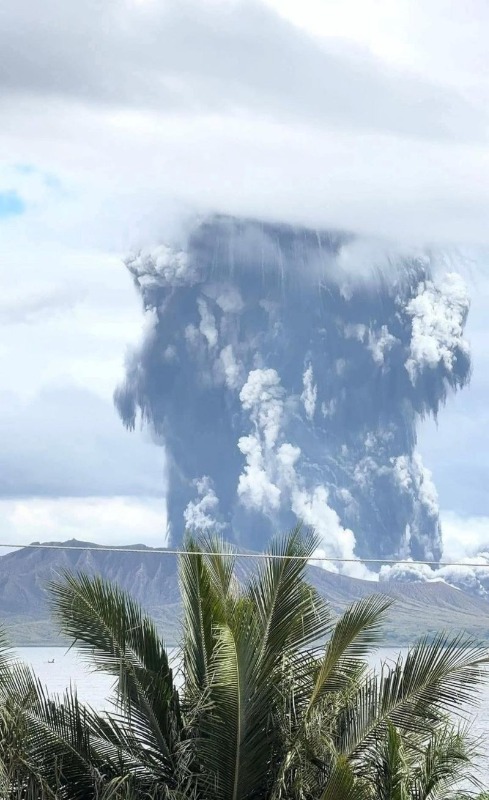
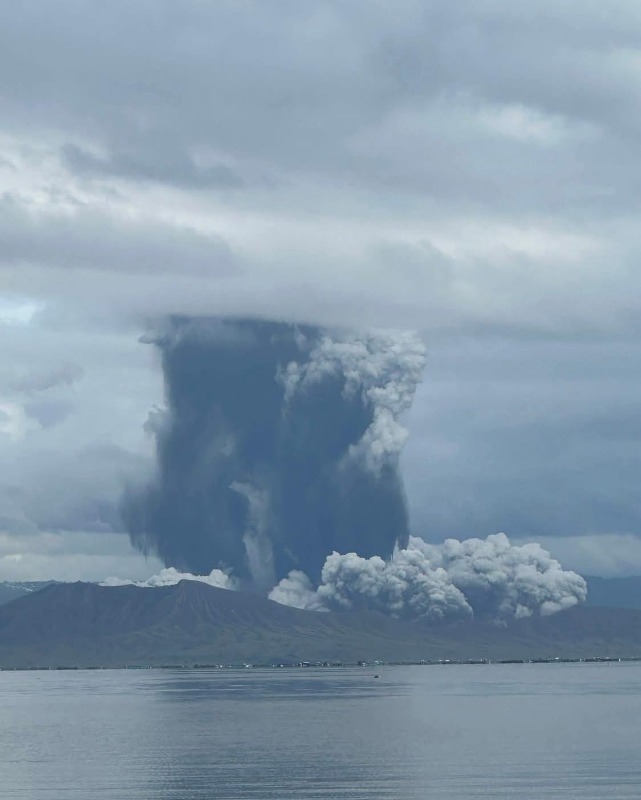
Phivolcs reported that it recorded one minor phreatic eruption, which occurred at 2:55 a.m., and two minor phreatomagmatic eruptions at 8:13 a.m. and 8:20 a.m.
The eruptions generated plumes that were spewed up to 1,200–2,100 meters above the craters, according to Phivolcs.It also raised Alert Level 1 for the Taal Volcano.
During Alert Level 1, Phivolcs says that hydrothermal or tectonic activity may be occurring beneath the volcano; steam-driven, gas, or hydrothermal explosions can occur without warning.
On Saturday, October 25, Phivolcs also recorded a minor phreatomagmatic eruption at its main crater.
Last edit: 26 Oct 2025 11:42 by Luc SALAETS.
Please Log in to join the conversation.
- Luc SALAETS
-
- Offline
01 Oct 2025 08:22 #73
by Luc SALAETS

The Philippine Institute of Volcanology and Seismology (Phivolcs) reported a minor phreatomagmatic eruption of Taal Volcano early Wednesday morning, Oct. 1, which ended at 2:15 a.m.
According to the agency, the eruption started at 2:02 a.m.
“The event produced a 2500-meter-high eruption plume that drifted northwest,” the agency said in a Facebook post.
“Alert Level 1 prevails over Taal Volcano,” it added.
The agency noted that Alert Level 1 means the volcano is in an abnormal condition, with low-level unrest, and may show further signs of activity.
Taal Volcano, located in Batangas, is among the most active in the country, per the agency.
Replied by Luc SALAETS on topic Latest TAAL eruption
The Philippine Institute of Volcanology and Seismology (Phivolcs) reported a minor phreatomagmatic eruption of Taal Volcano early Wednesday morning, Oct. 1, which ended at 2:15 a.m.
According to the agency, the eruption started at 2:02 a.m.
“The event produced a 2500-meter-high eruption plume that drifted northwest,” the agency said in a Facebook post.
“Alert Level 1 prevails over Taal Volcano,” it added.
The agency noted that Alert Level 1 means the volcano is in an abnormal condition, with low-level unrest, and may show further signs of activity.
Taal Volcano, located in Batangas, is among the most active in the country, per the agency.
Please Log in to join the conversation.
- Luc SALAETS
-
- Offline
11 Aug 2025 06:07 #70
by Luc SALAETS
Replied by Luc SALAETS on topic Latest TAAL eruption
TAAL VOLCANO ADVISORY
10 August 2025
2:00 PM
This is a notice of increased seismic energy release from Taal Volcano.
Since 05:25 AM today, 10 August 2025, stations of the Taal Volcano Network (TVN) situated on Taal Volcano Island (TVI) have been recording a pronounced increase in real-time seismic energy measurement, or RSAM, simultaneous with continuing volcanic tremor. A total of nineteen (19) volcanic earthquakes has been recorded by the TVN since 09 August 2025. Visual observations noted a moderate to voluminous plume from the Taal Main Crater since the start of RSAM increase. Taal has been degassing low levels of sulfur dioxide or SO2 since June 2025 with the latest emission measured on 8 August 2025, averaging 374 tonnes/day. These sharp increase in RSAM and vigorous steaming from the Main Crater may lead to a phreatic or even a minor phreatomagmatic eruption.
DOST-PHIVOLCS reminds the public that Alert Level 1 prevails over Taal Volcano, which means that it is still in abnormal condition and should not be interpreted to have ceased unrest nor ceased the threat of eruptive activity. At Alert Level 1, sudden steam-driven or phreatic or minor phreatomagmatic eruptions, minor ashfall and lethal accumulations or expulsions of volcanic gas can occur and threaten areas within TVI. DOST-PHIVOLCS strongly recommends that entry into TVI, Taal’s Permanent Danger Zone or PDZ, especially the vicinities of the Main Crater and the Daang Kastila fissure, must remain strictly prohibited. Local government units are advised to continuously prepare for potential recurrence of volcanic SO2 increases and exposure of their communities and undertake appropriate response measures to mitigate the health impacts of these hazards. Lastly, civil aviation authorities must also advise pilots to avoid flying above TVI as ash from any sudden eruption can be hazardous to aircraft.
DOST-PHIVOLCS is closely monitoring Taal Volcano’s activity and any new significant development will be immediately communicated to all stakeholders.
DOST-PHIVOLCS
10 August 2025
2:00 PM
This is a notice of increased seismic energy release from Taal Volcano.
Since 05:25 AM today, 10 August 2025, stations of the Taal Volcano Network (TVN) situated on Taal Volcano Island (TVI) have been recording a pronounced increase in real-time seismic energy measurement, or RSAM, simultaneous with continuing volcanic tremor. A total of nineteen (19) volcanic earthquakes has been recorded by the TVN since 09 August 2025. Visual observations noted a moderate to voluminous plume from the Taal Main Crater since the start of RSAM increase. Taal has been degassing low levels of sulfur dioxide or SO2 since June 2025 with the latest emission measured on 8 August 2025, averaging 374 tonnes/day. These sharp increase in RSAM and vigorous steaming from the Main Crater may lead to a phreatic or even a minor phreatomagmatic eruption.
DOST-PHIVOLCS reminds the public that Alert Level 1 prevails over Taal Volcano, which means that it is still in abnormal condition and should not be interpreted to have ceased unrest nor ceased the threat of eruptive activity. At Alert Level 1, sudden steam-driven or phreatic or minor phreatomagmatic eruptions, minor ashfall and lethal accumulations or expulsions of volcanic gas can occur and threaten areas within TVI. DOST-PHIVOLCS strongly recommends that entry into TVI, Taal’s Permanent Danger Zone or PDZ, especially the vicinities of the Main Crater and the Daang Kastila fissure, must remain strictly prohibited. Local government units are advised to continuously prepare for potential recurrence of volcanic SO2 increases and exposure of their communities and undertake appropriate response measures to mitigate the health impacts of these hazards. Lastly, civil aviation authorities must also advise pilots to avoid flying above TVI as ash from any sudden eruption can be hazardous to aircraft.
DOST-PHIVOLCS is closely monitoring Taal Volcano’s activity and any new significant development will be immediately communicated to all stakeholders.
DOST-PHIVOLCS
Please Log in to join the conversation.
- Luc SALAETS
-
- Offline
06 Jul 2025 19:07 #67
by Luc SALAETS
Replied by Luc SALAETS on topic Latest TAAL eruption
TAAL VOLCANO ADVISORY 06 July 2025 3:20 PM
This is a notice of increased seismic energy release from Taal Volcano.
Since 03:37 AM today, 06 July 2025, stations of the Taal Volcano Network (TVN) situated on Taal Volcano Island (TVI) have been recording a pronounced increase in real-time seismic energy measurement or RSAM simultaneous with continuing volcanic tremor.
A total of only two (2) low frequency volcanic earthquakes have been recorded by the TVN since 01 July 2025. Visual observations also noted the absence of a degassing plume from the Taal Main Crater since the start of RSAM increase. Taal has been degassing low levels of sulfur dioxide or SO2 since June 2025 with the latest emission measured on 4 July 2025 averaging 377 tonnes/day.
The sharp increase in RSAM and the lack of observable degassing from the Main Crater may indicate blockage or plugging of volcanic gas pathways within the volcano, which may lead to short-term pressurization and trigger a phreatic or even a minor phreatomagmatic eruption.
DOST-PHIVOLCS reminds the public that Alert Level 1 prevails over Taal Volcano, which means that it is still in abnormal condition and should not be interpreted to have ceased unrest nor ceased the threat of eruptive activity. At Alert Level 1, sudden steam-driven or phreatic or minor phreatomagmatic eruptions, minor ashfall and lethal accumulations or expulsions of volcanic gas can occur and threaten areas within TVI.
DOST-PHIVOLCS strongly recommends that entry into TVI, Taal’s Permanent Danger Zone or PDZ, especially the vicinities of the Main Crater and the Daang Kastila fissure, must remain strictly prohibited. Local government units are advised to continuously prepare for potential recurrence of volcanic SO2 increases and exposure of their communities and undertake appropriate response measures to mitigate the health impacts of these hazards. Lastly, civil aviation authorities must also advise pilots to avoid flying above TVI as ash from any sudden eruption can be hazardous to aircraft.
DOST-PHIVOLCS is closely monitoring Taal Volcano’s activity and any new significant development will be immediately communicated to all stakeholders.
DOST-PHIVOLCS
This is a notice of increased seismic energy release from Taal Volcano.
Since 03:37 AM today, 06 July 2025, stations of the Taal Volcano Network (TVN) situated on Taal Volcano Island (TVI) have been recording a pronounced increase in real-time seismic energy measurement or RSAM simultaneous with continuing volcanic tremor.
A total of only two (2) low frequency volcanic earthquakes have been recorded by the TVN since 01 July 2025. Visual observations also noted the absence of a degassing plume from the Taal Main Crater since the start of RSAM increase. Taal has been degassing low levels of sulfur dioxide or SO2 since June 2025 with the latest emission measured on 4 July 2025 averaging 377 tonnes/day.
The sharp increase in RSAM and the lack of observable degassing from the Main Crater may indicate blockage or plugging of volcanic gas pathways within the volcano, which may lead to short-term pressurization and trigger a phreatic or even a minor phreatomagmatic eruption.
DOST-PHIVOLCS reminds the public that Alert Level 1 prevails over Taal Volcano, which means that it is still in abnormal condition and should not be interpreted to have ceased unrest nor ceased the threat of eruptive activity. At Alert Level 1, sudden steam-driven or phreatic or minor phreatomagmatic eruptions, minor ashfall and lethal accumulations or expulsions of volcanic gas can occur and threaten areas within TVI.
DOST-PHIVOLCS strongly recommends that entry into TVI, Taal’s Permanent Danger Zone or PDZ, especially the vicinities of the Main Crater and the Daang Kastila fissure, must remain strictly prohibited. Local government units are advised to continuously prepare for potential recurrence of volcanic SO2 increases and exposure of their communities and undertake appropriate response measures to mitigate the health impacts of these hazards. Lastly, civil aviation authorities must also advise pilots to avoid flying above TVI as ash from any sudden eruption can be hazardous to aircraft.
DOST-PHIVOLCS is closely monitoring Taal Volcano’s activity and any new significant development will be immediately communicated to all stakeholders.
DOST-PHIVOLCS
Please Log in to join the conversation.
- Luc SALAETS
-
- Offline
15 Apr 2025 20:22 - 15 Apr 2025 20:25 #64
by Luc SALAETS
Replied by Luc SALAETS on topic Latest TAAL update April 2025
LUCENA CITY, QUEZON, Philippines — Taal Volcano in Batangas province recorded 55 volcanic earthquakes and 19 volcanic tremors for the past five days, according to the Philippine Institute of Volcanology and Seismology (Phivolcs).
In its Sunday morning bulletin, Phivolcs said the volcano logged 10 earthquakes accompanied by two volcanic tremors lasting one to two minutes within the last 24 hours.
On April 11, the agency detected seven volcanic earthquakes along with five volcanic tremors that lasted three to eight minutes during its observation period.
On April 10, Phivolcs reported that eight volcanic tremors that lasted two to four minutes also occurred.
On April 9, Taal recorded 20 volcanic earthquakes, accompanied by two volcanic tremors that lasted one to two minutes while another 18 volcanic earthquakes were detected, along with one volcanic tremor that lasted three minutes, on April 8.
As of Sunday April 13, the volcano remained under alert level 1, indicating abnormal activity. But Phivolcs stressed that the alert level did not signify the cessation of unrest or the threat of eruptive activity.
“[Under] alert level 1, sudden steam-driven or phreatic or minor phreatomagmatic eruptions, volcanic earthquakes, minor ashfall and lethal accumulations or expulsions of volcanic gas can occur and threaten areas within TVI (Taal Volcano Island),” the agency said.
The agency clarified that volcanic earthquakes originate from active volcanoes and exhibit distinct patterns characterized by their “mode of arrivals, periods and amplitudes.
”Volcanic tremors, on the other hand, are continuous seismic signals with either regular or irregular wave patterns and low frequencies.
‘Weak emission’
During the observation period on Saturday, Phivolcs noted the emission of 1,074 metric tons of sulfur dioxide from Taal Volcano’s main crater, with plumes rising up to 400 meters high.
Phivolcs classified the latest activity as a “weak emission.”
There were no reports of upwelling of hot volcanic fluids in the main crater lake on TVI located in the middle of Taal Lake.
No volcanic smog, or vog, was observed during the latest monitoring period.
Taal Volcano, which sits in the middle of Taal Lake in the province of Batangas, is the second most active volcano in the country with 38 recorded historical eruptions. The most active volcano in the Philippines is Mayon Volcano in Albay province, with over 50 recorded eruptions in the past 500 years.
In its Sunday morning bulletin, Phivolcs said the volcano logged 10 earthquakes accompanied by two volcanic tremors lasting one to two minutes within the last 24 hours.
On April 11, the agency detected seven volcanic earthquakes along with five volcanic tremors that lasted three to eight minutes during its observation period.
On April 10, Phivolcs reported that eight volcanic tremors that lasted two to four minutes also occurred.
On April 9, Taal recorded 20 volcanic earthquakes, accompanied by two volcanic tremors that lasted one to two minutes while another 18 volcanic earthquakes were detected, along with one volcanic tremor that lasted three minutes, on April 8.
As of Sunday April 13, the volcano remained under alert level 1, indicating abnormal activity. But Phivolcs stressed that the alert level did not signify the cessation of unrest or the threat of eruptive activity.
“[Under] alert level 1, sudden steam-driven or phreatic or minor phreatomagmatic eruptions, volcanic earthquakes, minor ashfall and lethal accumulations or expulsions of volcanic gas can occur and threaten areas within TVI (Taal Volcano Island),” the agency said.
The agency clarified that volcanic earthquakes originate from active volcanoes and exhibit distinct patterns characterized by their “mode of arrivals, periods and amplitudes.
”Volcanic tremors, on the other hand, are continuous seismic signals with either regular or irregular wave patterns and low frequencies.
‘Weak emission’
During the observation period on Saturday, Phivolcs noted the emission of 1,074 metric tons of sulfur dioxide from Taal Volcano’s main crater, with plumes rising up to 400 meters high.
Phivolcs classified the latest activity as a “weak emission.”
There were no reports of upwelling of hot volcanic fluids in the main crater lake on TVI located in the middle of Taal Lake.
No volcanic smog, or vog, was observed during the latest monitoring period.
Taal Volcano, which sits in the middle of Taal Lake in the province of Batangas, is the second most active volcano in the country with 38 recorded historical eruptions. The most active volcano in the Philippines is Mayon Volcano in Albay province, with over 50 recorded eruptions in the past 500 years.
Last edit: 15 Apr 2025 20:25 by Luc SALAETS.
Please Log in to join the conversation.
- Luc SALAETS
-
- Offline
30 Nov 2024 15:15 #17
by Luc SALAETS
Replied by Luc SALAETS on topic Latest TAAL eruption
Taal Volcano in Batangas province recorded another minor phreatic eruption and four earthquakes on Friday, Nov. 29, the Philippine Institute of Volcanology and Seismology (Phivolcs) reported.
“A minor phreatic eruption from Taal Volcano Island’s Main Crater at 11:25 AM today (29 November 2024), which generated a 1,200-meter white plume, was captured by the IP camera of the Agoncillo Observation Station,” Phivolcs said in a post on its Facebook page.
The eruption lasted six minutes, the agency noted in its bulletin Saturday morning, Nov. 30.
On Nov. 28 at 5:46 a.m., the volcano also had a minor steam-driven eruption that produced a 1,500-meter-high white plume.
A phreatic eruption occurs when water beneath the ground or on the surface is heated by magma, lava, hot rocks, or new volcanic deposits (for example, tephra and pyroclastic-flow deposits), Phivolcs explained.
Phivolcs records another minor eruption at Taal Volcano.
In its latest bulletin issued Saturday, Phivolcs recorded the emission of 6,307 metric tons of sulfur dioxide from Taal’s main crater, which rose 1,200 meters high before drifting southwest.
“A minor phreatic eruption from Taal Volcano Island’s Main Crater at 11:25 AM today (29 November 2024), which generated a 1,200-meter white plume, was captured by the IP camera of the Agoncillo Observation Station,” Phivolcs said in a post on its Facebook page.
The eruption lasted six minutes, the agency noted in its bulletin Saturday morning, Nov. 30.
On Nov. 28 at 5:46 a.m., the volcano also had a minor steam-driven eruption that produced a 1,500-meter-high white plume.
A phreatic eruption occurs when water beneath the ground or on the surface is heated by magma, lava, hot rocks, or new volcanic deposits (for example, tephra and pyroclastic-flow deposits), Phivolcs explained.
Phivolcs records another minor eruption at Taal Volcano.
In its latest bulletin issued Saturday, Phivolcs recorded the emission of 6,307 metric tons of sulfur dioxide from Taal’s main crater, which rose 1,200 meters high before drifting southwest.
Please Log in to join the conversation.